
Screening technology
Circular screening machine
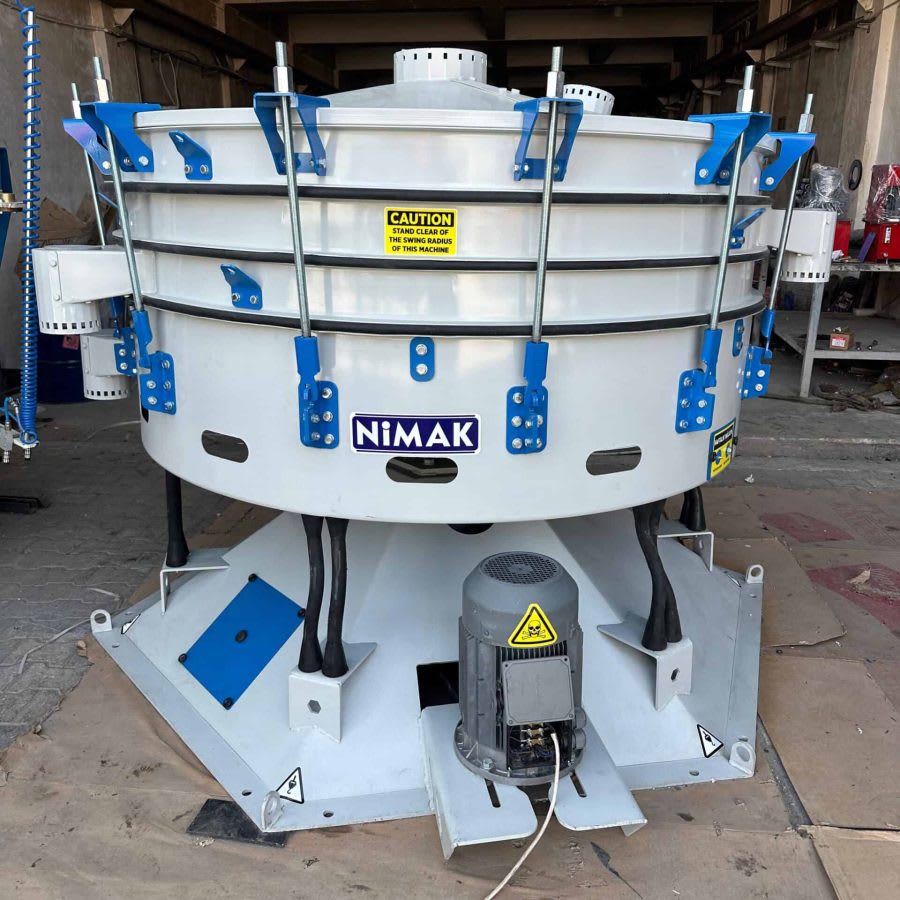
The micronized circular screener separates fine mineral and product powders reliably in the micron range. An eccentric motor creates combined vertical and horizontal motion that carries the feed across multiple decks.
Confirm price, delivery and installation
Operating principle
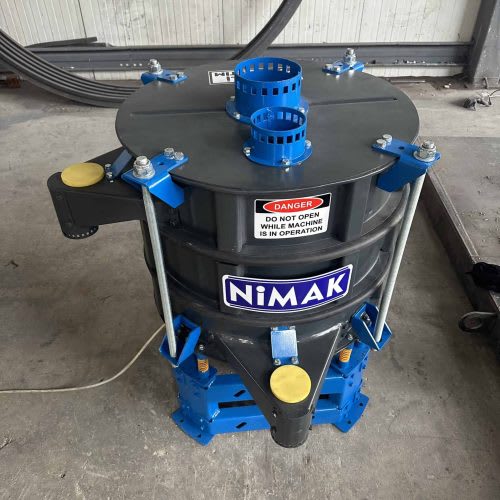
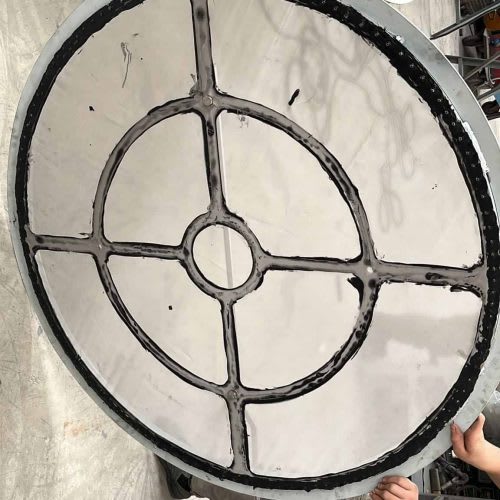
An eccentric motor drives the screen body in a three-dimensional vibration with vertical and horizontal components. Material travels in a spiral across the deck and is classified by particle size on each layer. Ball or knocking devices under the cloth keep apertures open. The closed housing limits dust escape; the heavy steel body is oven-painted, with a stainless-steel option.
Where this machine is used
This screening machine classifies fine feed in the micron range: calcite, marble powder, talc, kaolin, cement, gypsum, food powders and chemical-mineral raw materials.
Advantages
Three-dimensional motion for sharp cuts
Several decks in one machine
Ball and knocking anti-blinding against mesh blockage
Closed, low-dust housing
Technical data
Capacity
On request
Screen area
On request
Motor power
On request
Efficiency
On request
Options
- Stainless-steel housing
- Additional screen decks
- Ball or knocking anti-blinding
- Oven-painted heavy-duty finish
Industries
- Minerals & fillers
- Cement & building materials
- Food powders
- Chemicals
Material options
- Calcite and marble powder
- Talc and kaolin
- Cement and gypsum
- Fine food and chemical powders
Frequently asked sizing questions
What duties suit a circular screening machine?
It is used for safety screening and classification of fine, dry powders. Suitability depends on factors including size distribution, moisture, bulk density and required throughput.
What data is required for sizing?
Required data includes feed material, size distribution before and after screening, moisture, bulk density, temperature, required throughput, number of fractions and available installation height.
Are throughput and cut size fixed catalogue values?
No. Both values are checked for the actual product and selected screen configuration. Binding figures belong in the project-specific technical specification.
Related machines
Information for a reliable technical assessment
Complete process data helps us assess the machine, options and scope of supply more precisely.
- Feed material or workpiece and required process result
- Initial condition, target quality and required capacity or cycle time
- Operating conditions such as moisture, temperature, abrasion or hygiene requirements
- Available installation space and mechanical, electrical or process interfaces
- Required scope of supply and technical documentation
Have the machine sized for your process
Tell us the feed material, feed and target particle size, required capacity and operating time. We will assess the technically suitable configuration.