
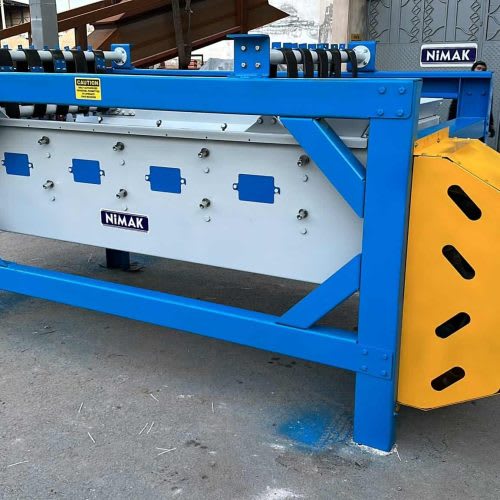
Screening technology
Planar sifter
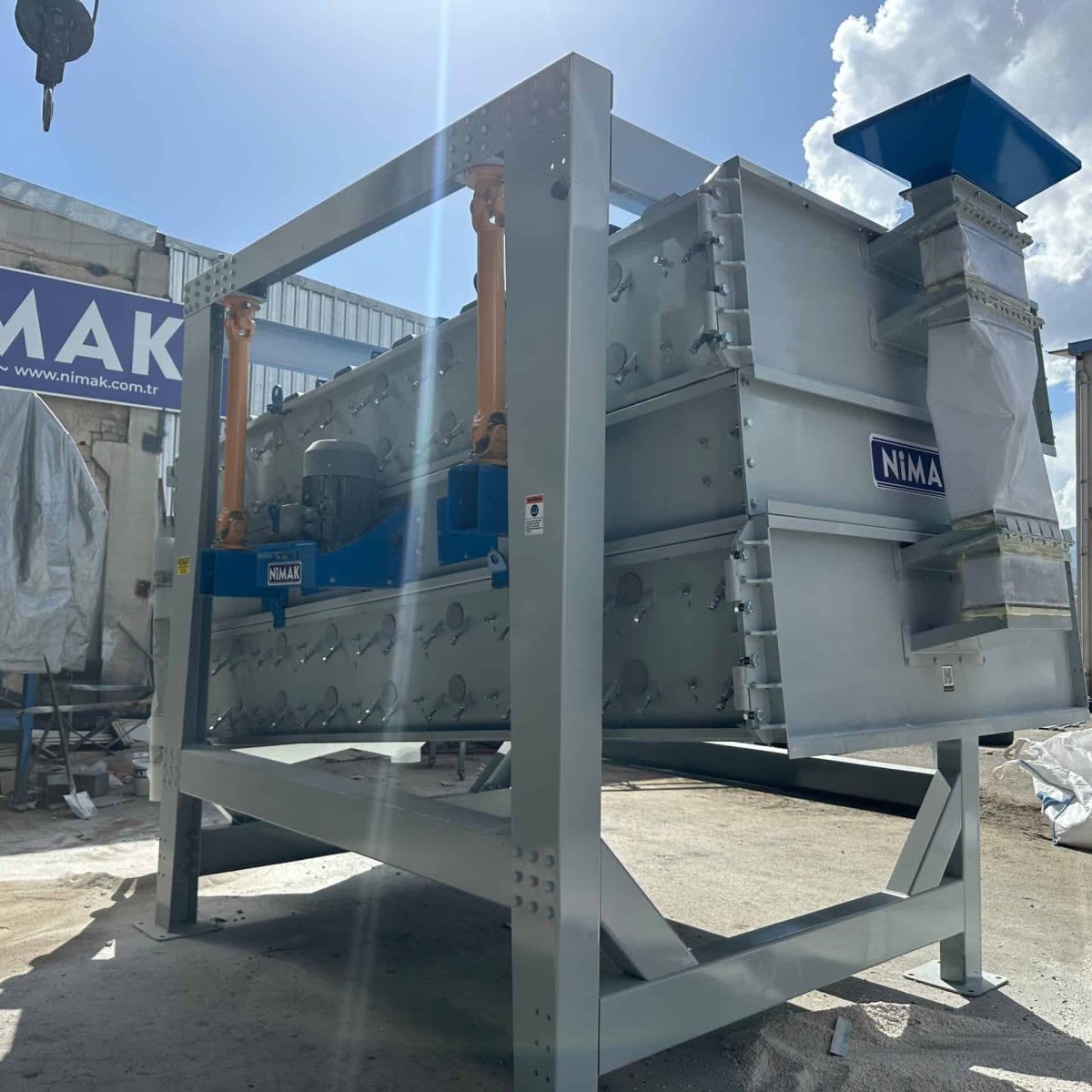
The planar sifter—also known in milling as a plansifter—classifies grain products and granules on long, multi-layer decks. Screening path, loading and motion are sized for the product and required fractions.
Confirm price, delivery and installation
Operating principle
The screen box combines horizontal reciprocating travel with circular oscillation. Material glides over long decks and is classified in several layers. Motion parameters, building loads, mesh access and screen area are sized for the product, throughput and separation target.
Where this machine is used
Planar sifting machine for mills and granule lines. Typical feed: flour, semolina, grain, pulses, chemicals, plastic granules and minerals.
Advantages
Planar motion matched to product and separation target
Long, multi-layer screen decks
Installation based on permitted building vibration
Mesh change based on maintenance concept
Technical data
Capacity
On request
Screen area
On request
Motor power
On request
Number of layers
On request
Options
- Multi-layer screen stacks
- Linear-shake layout for coarse cuts
- Contact materials by product specification
- Quick-change frames
Industries
- Milling & grain
- Food
- Chemicals
- Plastics
Material options
- Flour and semolina
- Grain and pulses
- Plastic granules
- Chemicals and minerals
Frequently asked sizing questions
When is a planar sifter used?
It is assessed for multi-stage classification of dry, free-flowing products, particularly in mills and granule lines. Number of fractions, screening path and product behaviour determine the configuration.
What data is needed for a planar-sifter quote?
Provide product, size distribution, target sizes, throughput, bulk density, moisture, number of fractions, operating time, installation space and cleaning requirements.
How is achievable separation sharpness confirmed?
It depends on particle shape, size distribution, moisture, screen medium, loading and residence time. Binding results are derived from reliable product data or material trials.
Related machines
Information for a reliable technical assessment
Complete process data helps us assess the machine, options and scope of supply more precisely.
- Feed material or workpiece and required process result
- Initial condition, target quality and required capacity or cycle time
- Operating conditions such as moisture, temperature, abrasion or hygiene requirements
- Available installation space and mechanical, electrical or process interfaces
- Required scope of supply and technical documentation
Have the machine sized for your process
Tell us the feed material, feed and target particle size, required capacity and operating time. We will assess the technically suitable configuration.