
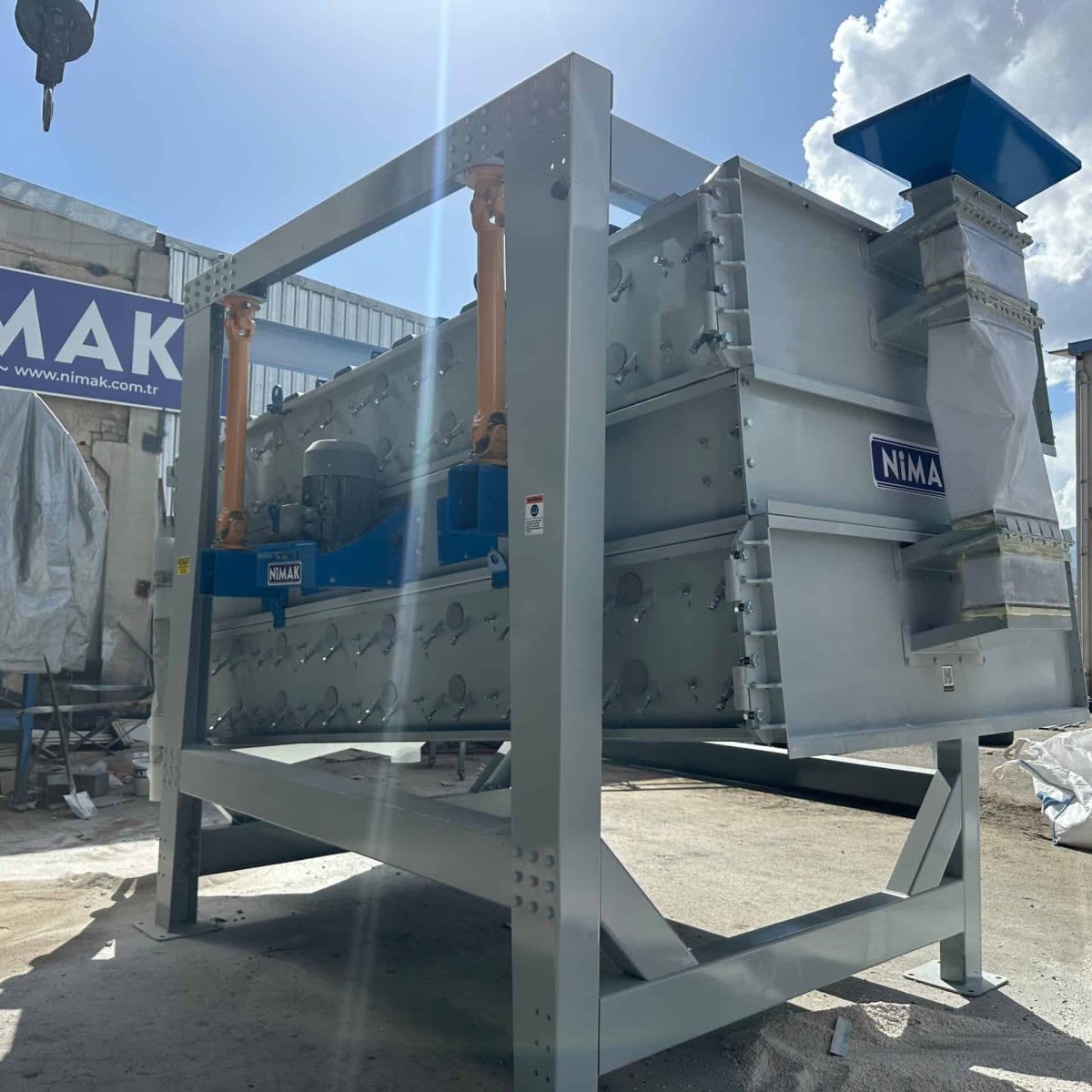
Screening technology
Tumbler screening machine
The gyratory screener uses a horizontal circular motion and guides material on a spiral path over a long screening distance. Low vertical acceleration protects sensitive particles and limits attrition.
Confirm price, delivery and installation
Which screening machine?
Tumbler screening machine or vibrating screen: the gyratory screener is the gentle, quiet machine for fine classification; the vibro screener is the compact high-frequency machine. Sizing and quotation from Kaufbeuren.
Operating principle
The screen box performs a horizontal gyratory motion. Feed follows a spiral from the centre to the rim and is classified on multiple decks. Low vertical acceleration reduces pegging and noise. Stainless-steel versions suit food and chemical service.
Where this machine is used
This screening machine classifies feed in mills, blending plants and packing lines. Typical duties: flour, starch, sugar, spices, chemicals, pharmaceuticals, ceramics, plastic granules, mineral powder and fertiliser.
Industries
Tumbler or vibrating screening machine?
Both machines classify bulk solids but create different product movements. This table is an initial guide; selection is made from actual material and process data.
| Tumbler screening machine (gyratory) | Vibrating screening machine (vibro) | |
|---|---|---|
| Motion | Predominantly horizontal circular motion with a long screening path | High-frequency vibration in a compact circular screen |
| Typical objective | Gentle fine and multi-fraction classification across multiple decks | Compact safety screening and classification; depending on configuration, also solid-liquid separation |
| Material behaviour | A first option to assess for dry, free-flowing and sensitive powders or granules | For powders, granules and suspensions; configuration follows the separation target and product condition |
| Decision data | Material, moisture, bulk density, size distribution, throughput, fractions and installation space | Material, moisture, bulk density, size distribution, throughput, fractions and installation space |
Machine in operation
Certificates and documentation
CE certificate of conformity – NSE range
Certificate No. 1265 for the Dairesel Elek / Tumbler Screening Machine in the NSE range (NSE 500–3000). Issued 16 July 2026; valid until 15 July 2027.
View certificateAdvantages
Gentle horizontal circular motion
Long screening path via spiral travel
Quiet running, low vertical acceleration
Multi-deck classification in one housing
Technical data
Capacity
On request
Screen area
On request
Motor power
On request
Number of decks
On request
Options
- Stainless steel for food and chemicals
- Multiple screen decks
- Hygienic housing design
- Quick mesh change
Industries
- Food
- Pharma & cosmetics
- Chemicals
- Plastics
- Minerals
Material options
- Flour, starch and sugar
- Spices and pharmaceuticals
- Plastic granules
- Mineral powder and fertiliser
Frequently asked sizing questions
When is a tumbler screening machine the right choice?
It is particularly suitable for dry, free-flowing powders and granules when gentle motion, a long screening path and precise multi-fraction classification are required. We assess other screen principles for sticky or very wet feed.
Which data is required for sizing?
We need feed material, bulk density, moisture, feed and target particle size, required throughput, number of fractions, temperature and material or cleaning requirements. Screen area, number of decks and drive can then be selected reliably.
Is the machine suitable for food applications?
A stainless-steel and cleaning-friendly configuration is available. Suitability depends on the product, cleaning method and customer-required materials and documentation and is defined for each project.
Related machines
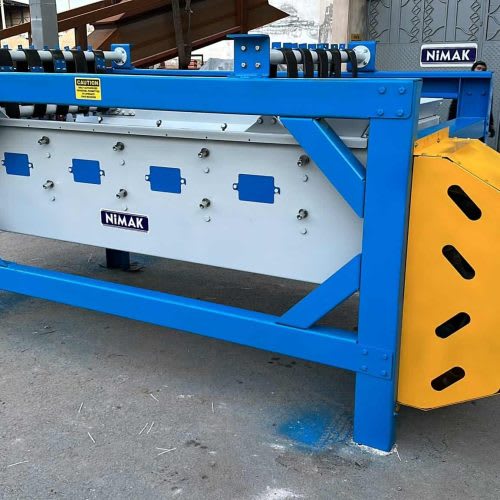
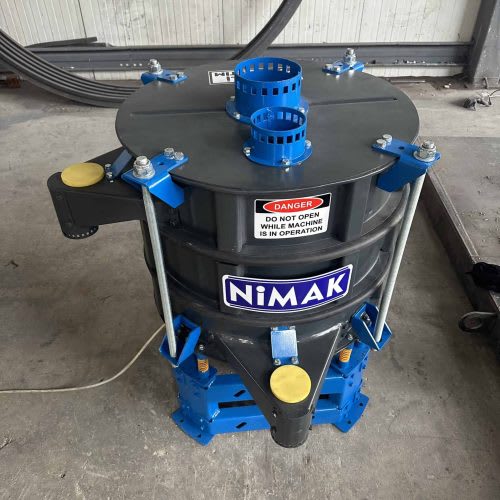
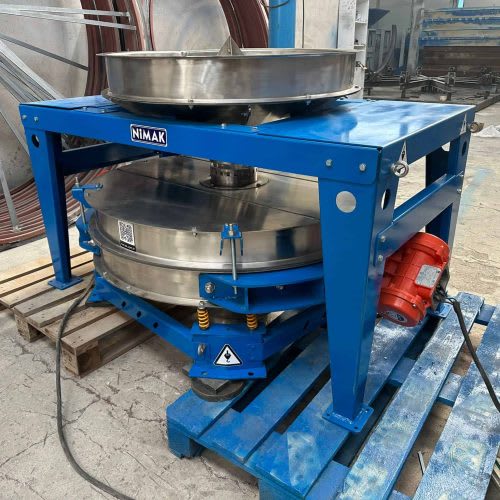
Information for a reliable technical assessment
Complete process data helps us assess the machine, options and scope of supply more precisely.
- Feed material or workpiece and required process result
- Initial condition, target quality and required capacity or cycle time
- Operating conditions such as moisture, temperature, abrasion or hygiene requirements
- Available installation space and mechanical, electrical or process interfaces
- Required scope of supply and technical documentation
Have the machine sized for your process
Tell us the feed material, feed and target particle size, required capacity and operating time. We will assess the technically suitable configuration.