
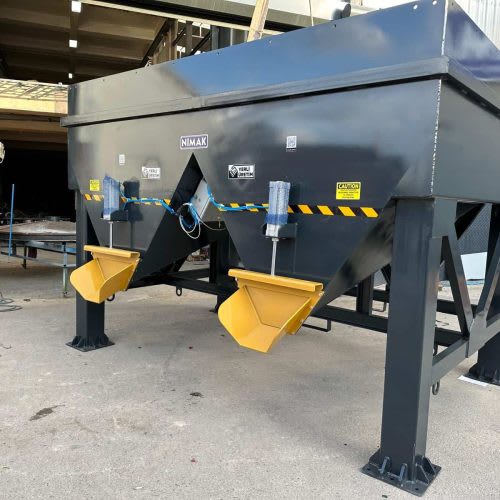
Hoppers & silos
Hopper / silo
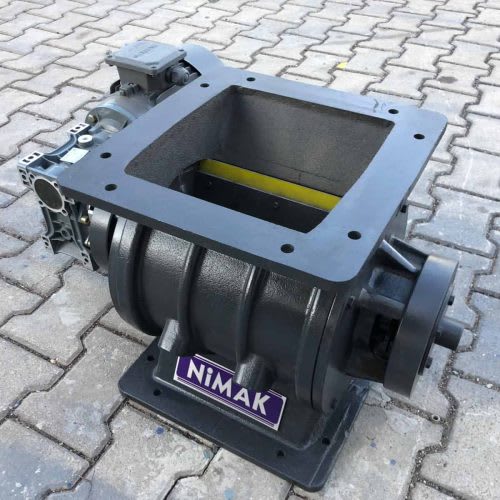
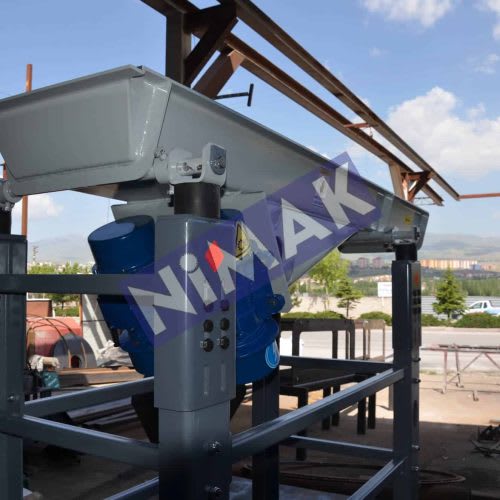
Hoppers and silos store bulk solids between process stages. Cone angle, volume and plate thickness follow flow behaviour; discharge is via slide gate, vibratory discharger or rotary valve.
Confirm price, delivery and installation
Operating principle
Steel vessels are designed for throughput, angle of repose and discharge method. Cone angle and optional wear linings keep flow moving. Discharge sits at the low point: a slide gate, vibratory discharger or rotary valve meters into the next stage.
Where this machine is used
Intermediate storage in crushing-screening plants, cement, fertiliser, food and chemicals – for aggregates, calcite, grain and powders.
Advantages
Design by flow behaviour
Wear lining for abrasive materials
Discharge by slide, vibration or rotary valve
Volume and plate thickness by project
Technical data
Working volume
On request
Plate thickness
On request
Cone angle
On request
Discharge
On request
Options
- Cone angle by material
- Wear lining
- Vibratory discharge or rotary valve
- Level and dust-extraction connections
Industries
- Crushing-screening plants
- Cement
- Fertiliser
- Food & chemicals
Material options
- Aggregates and calcite
- Grain
- Industrial powders
Frequently asked sizing questions
What information does UnionBridge need for a hopper or silo?
Key data includes bulk material, bulk density, moisture, particle size, flow behaviour, required working volume, inlet and discharge rate, required buffer time, installation location and temperature. Flow testing may be useful for difficult materials.
How are bridging and ratholing addressed?
Hopper geometry, outlet size, surfaces, lining and possible flow aids are selected from the actual flow behaviour. Vibration or agitators are not universal remedies and are used only when justified by the material and process.
Which interfaces must be clarified before quotation?
The filling and discharge points, connection dimensions, support structure and loads, level measurement, dust extraction, maintenance access and explosion and occupational-safety requirements must be clarified. Supply scope and customer responsibilities are then clearly separated in the quotation.
Related machines
Information for a reliable technical assessment
Complete process data helps us assess the machine, options and scope of supply more precisely.
- Feed material or workpiece and required process result
- Initial condition, target quality and required capacity or cycle time
- Operating conditions such as moisture, temperature, abrasion or hygiene requirements
- Available installation space and mechanical, electrical or process interfaces
- Required scope of supply and technical documentation
Have the machine sized for your process
Tell us the feed material, feed and target particle size, required capacity and operating time. We will assess the technically suitable configuration.