
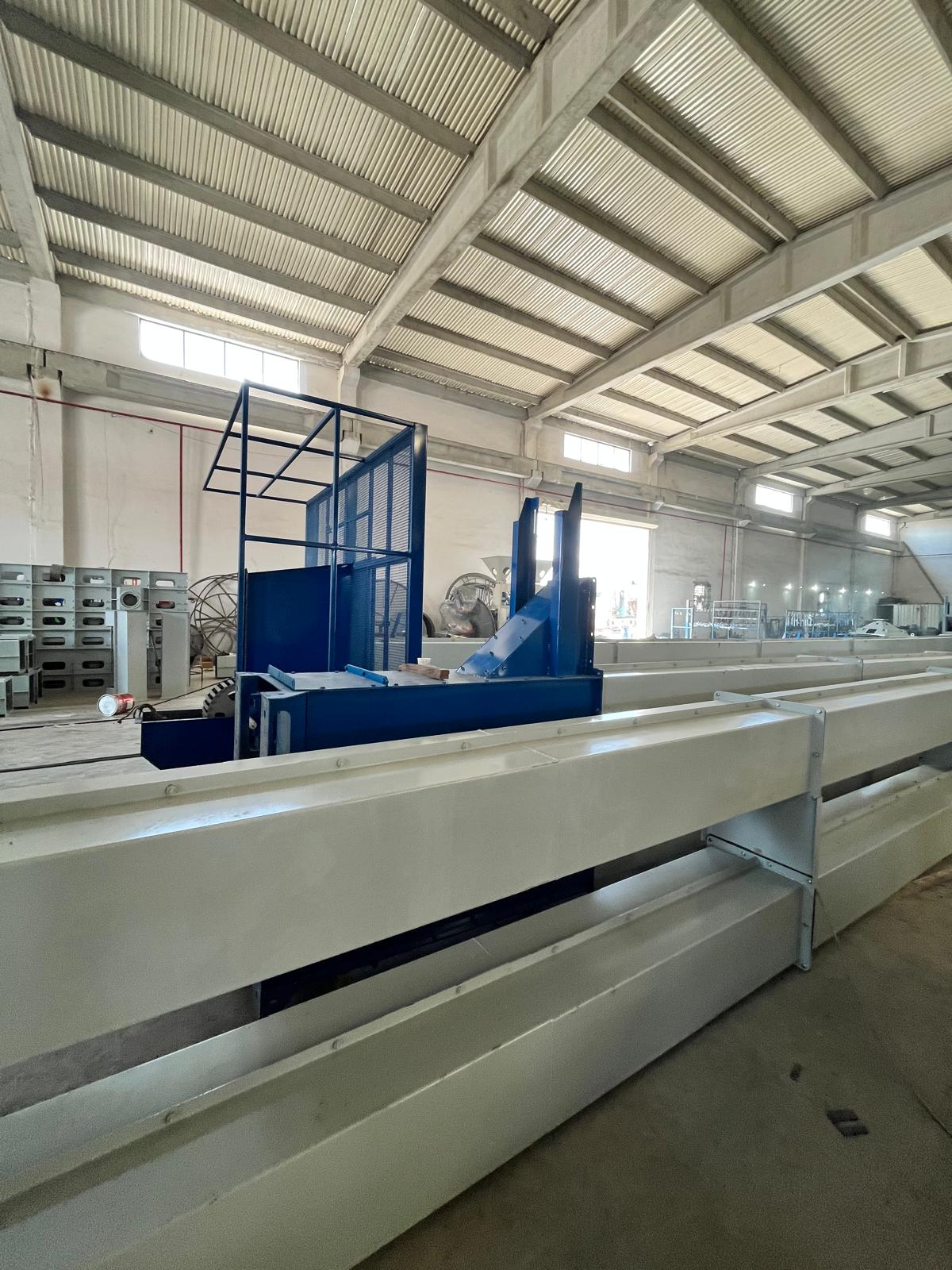
Conveying technology
Screw conveyor
The screw conveyor moves bulk solids in a tube or trough with a rotating screw. The enclosed design supports low-dust conveying; horizontal, inclined or vertical configurations are assessed for the product and route.
Confirm price, delivery and installation
Operating principle
A screw of fixed or variable pitch conveys material through a tube or trough. Diameter and pitch set throughput and fill. Besides conveying, the screw can dose or mix. The enclosed run limits dust and weather.
Where this machine is used
Cement, ash, flour, calcite, fertiliser and grain – for silo feeding, dosing and process lines.
Industries
Advantages
Enclosed, low-dust conveying path
Horizontal, inclined or vertical
Variable pitch and diameter
Convey, dose and mix in one run
Technical data
Capacity
On request
Screw diameter
On request
Conveying length
On request
Motor power
On request
Options
- Tube or trough housing
- Variable pitch
- Stainless steel for food
- Variable-frequency drive
Industries
- Cement & building materials
- Food
- Fertiliser
- Minerals
Material options
- Cement and ash
- Flour and grain
- Calcite
- Fertiliser
Frequently asked sizing questions
When is a screw conveyor suitable for bulk solids?
It is assessed for enclosed short-to-medium conveying runs and for dosing or mixing duties. Flow behaviour, abrasiveness, moisture, temperature and incline determine suitability.
What data is needed to size the conveyor?
Provide material, bulk density, particle size, moisture, temperature, required throughput, conveying length, lift, incline, connection points and daily operating time.
Tube or trough screw—what is the difference?
A tube screw provides a compact enclosed conveying path. Depending on configuration, a trough screw can simplify access, cleaning and maintenance. Selection follows the product, hygiene, dust containment and installation.
Related machines
Information for a reliable technical assessment
Complete process data helps us assess the machine, options and scope of supply more precisely.
- Feed material or workpiece and required process result
- Initial condition, target quality and required capacity or cycle time
- Operating conditions such as moisture, temperature, abrasion or hygiene requirements
- Available installation space and mechanical, electrical or process interfaces
- Required scope of supply and technical documentation
Have the machine sized for your process
Tell us the feed material, feed and target particle size, required capacity and operating time. We will assess the technically suitable configuration.