
Spare parts
Screen isolator
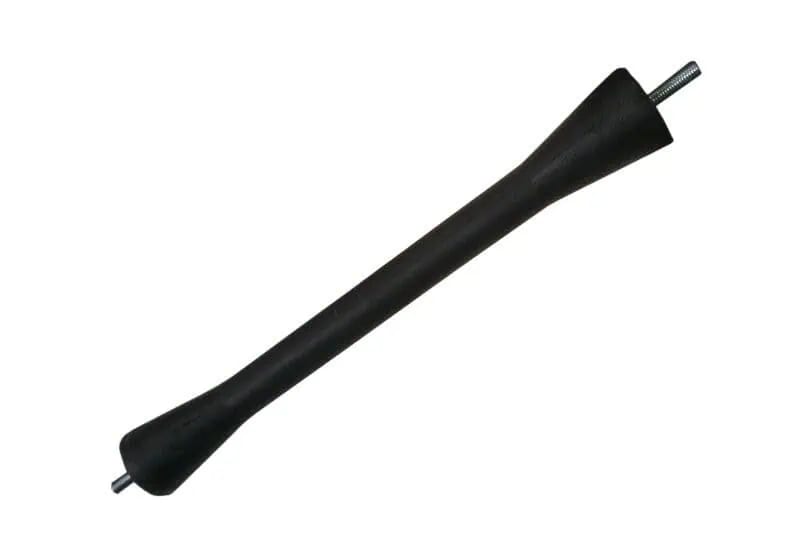
Screen isolators decouple the vibrating screen body from the frame. They sit as isolation mounts in rubber or polyurethane and protect the foundation, neighbouring equipment and bolted joints.
Confirm price, delivery and installation
Operating principle
Elastic mounts sit between the vibrating body and the stationary frame. They take vertical and horizontal forces and limit transmission into the building. The material is rubber or polyurethane – not chrome. Parts are matched to the supplied screen-machine series.
Where this machine is used
Vibration isolation on industrial screens of the supplied machine series.
Advantages
Decoupling of screen body and frame
Rubber or PU mounts, not chrome
Protection of foundation and neighbouring units
Matched to the supplied screen series
Technical data
Material
Rubber / polyurethane
Hardness
On request
Service life
On request
Compatibility
Supplied screen-machine series
Options
- Hardness by vibrating mass
- Rubber or PU compound
- Set delivery for the machine series
Industries
- Screening
- Maintenance
- Spare-parts supply
Material options
- Rubber
- Polyurethane
Frequently asked sizing questions
What data is needed for a matching screen isolator?
Required data includes machine model, installation position, dimensions, hole pattern, number of mounts, vibrating mass, speed or frequency, stroke and photos of the old part. Selection by outside dimensions alone is insufficient.
Can an isolator be replaced with a different hardness?
Only after technical review. Hardness, geometry and material affect natural frequency, stroke and transmitted forces. An unchecked substitution can change vibration behaviour and loads on the frame and foundation.
How is compatibility confirmed before ordering?
UnionBridge checks the drawing, dimensions, marking and machine reference. For an unknown design, an old part or dimensioned photo record is requested and approval is recorded in the quotation.
Related machines
Information for spare-part identification
These details help prevent mismatches before a quotation is prepared.
- Machine manufacturer, type and serial number
- Installation position and function of the component
- Dimensions, material and any marking or part number
- Medium, temperature and other operating conditions
- Clear photos, drawing or data sheet of the old part
Have the correct spare part identified
Provide the machine model, installation position, dimensions and old-part marking. Photos or drawings can be emailed to info@unionbridge.de with your company name.