
Spare parts
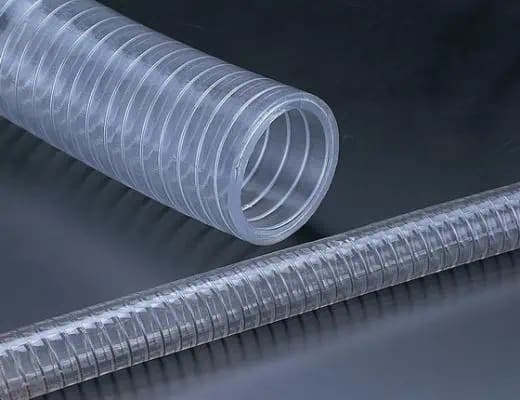
Steel-wire reinforced hose
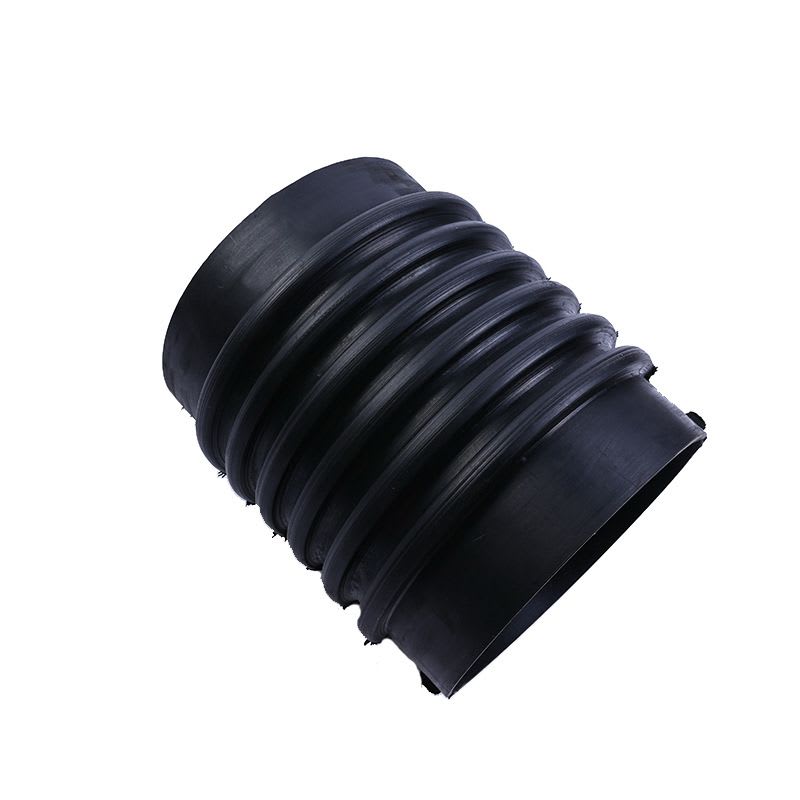
Steel-reinforced hoses join moving and fixed air or dust lines. The steel reinforcement holds shape and abrasion; the elastomer jacket stays flexible.
Confirm price, delivery and installation
Operating principle
An elastomer hose carries a steel helix or steel braid. The reinforcement takes vacuum, pressure and abrasion from dust. Typical duty is between a vibrating machine, cyclone, filter and a fixed duct.
Where this machine is used
Flexible connections in dust collection and pneumatic conveying with abrasive dust.
Advantages
Steel reinforcement against abrasion and vacuum
Flexible between moving and fixed duct
For abrasive dust and air runs
Connection to filter, cyclone and machine
Technical data
Nominal size
On request
Maximum vacuum
On request
Temperature range
On request
Service life
On request
Options
- Nominal size by air volume
- Reinforcement type by vacuum
- End fittings and clamps
Industries
- Dust collection
- Pneumatic conveying
- Screening and crushing
Material options
- Elastomer jacket
- Steel helix or steel braid
Frequently asked sizing questions
What data does UnionBridge need for a reinforced hose?
Required data includes inside and outside diameter, length, ends, operating and peak pressure or vacuum, temperature, medium, particle size, abrasiveness, movement and bend radius. Photos and old-part markings help comparison.
Is every steel-reinforced hose suitable for abrasive conveying?
No. Steel reinforcement mainly supports pressure or vacuum; wear is largely determined by the inner layer, velocity, particles and bend radii. The liner must be selected for the actual duty.
How is service life assessed?
It depends on medium, velocity, pressure cycles, temperature, bending, installation and hours. No fixed life is promised without documented conditions; inspection and replacement intervals follow the application.
Related machines
Information for spare-part identification
These details help prevent mismatches before a quotation is prepared.
- Machine manufacturer, type and serial number
- Installation position and function of the component
- Dimensions, material and any marking or part number
- Medium, temperature and other operating conditions
- Clear photos, drawing or data sheet of the old part
Have the correct spare part identified
Provide the machine model, installation position, dimensions and old-part marking. Photos or drawings can be emailed to info@unionbridge.de with your company name.