
Crushing technology
Chain crusher
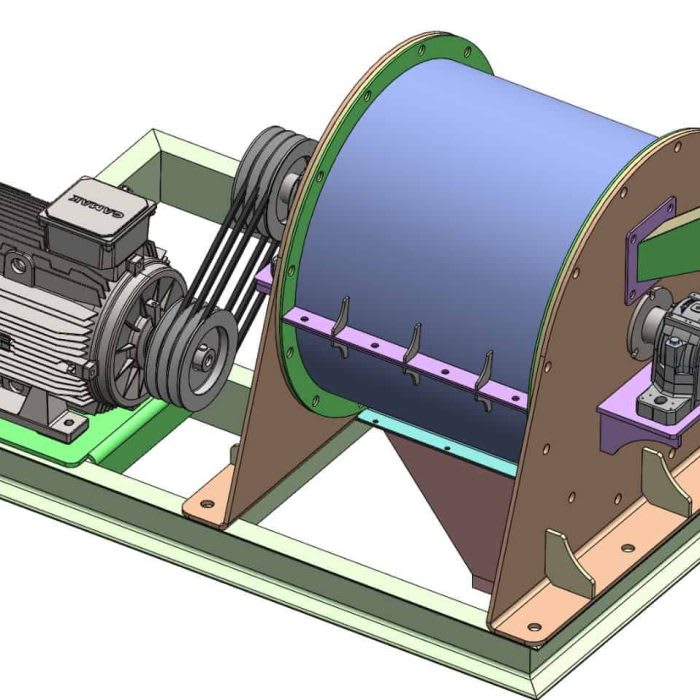
The chain crusher reduces material by impact and throwing with freely moving chains on the rotor. This layout can reduce clogging risk with sticky and moist feed, but tramp material must still be considered during sizing.
Confirm price, delivery and installation
Operating principle
Chains hang from the rotor and strike the feed at high relative speed. Impact breaks agglomerates and throwing disperses moist lumps. Chains, housing protection and tramp protection are specified for the actual duty.
Where this machine is used
Fertiliser, coal, clay, lumpy soil, salt and agglomerates in fertiliser plants, chemicals and mining.
Industries
Advantages
Chain fittings for sticky, moist materials
Tramp protection selected for the duty
Easy chain change
Impact and throwing comminution
Technical data
Capacity
On request
Feed size
On request
Motor power
On request
Product size
On request
Options
- Chain grade by wear duty
- Housing wear lining
- Dust-collection connection
- Adapted feed hoppers
Industries
- Fertiliser industry
- Chemicals
- Mining
Material options
- Fertiliser and agglomerates
- Coal and clay
- Lumpy soil
- Salt
Frequently asked sizing questions
When should a chain crusher be assessed?
It is assessed for lumpy, moist or sticky feed where freely moving chains can break agglomerates by impact. Suitability depends on hardness, abrasiveness, moisture and tramp material.
Which data determines sizing?
Required data includes material, feed and target size, throughput, moisture, bulk density, operating hours and tramp-material information. Rotor, chains, drive and wear protection are then specified for the project.
How are wear and maintenance addressed?
Chain grade, housing lining and access are selected for the material and operating mode. Binding wear life can only be agreed from reliable operating or trial data.
Related machines
Information for a reliable technical assessment
Complete process data helps us assess the machine, options and scope of supply more precisely.
- Feed material or workpiece and required process result
- Initial condition, target quality and required capacity or cycle time
- Operating conditions such as moisture, temperature, abrasion or hygiene requirements
- Available installation space and mechanical, electrical or process interfaces
- Required scope of supply and technical documentation
Have the machine sized for your process
Tell us the feed material, feed and target particle size, required capacity and operating time. We will assess the technically suitable configuration.