
Feeding & dosing
Powder packing
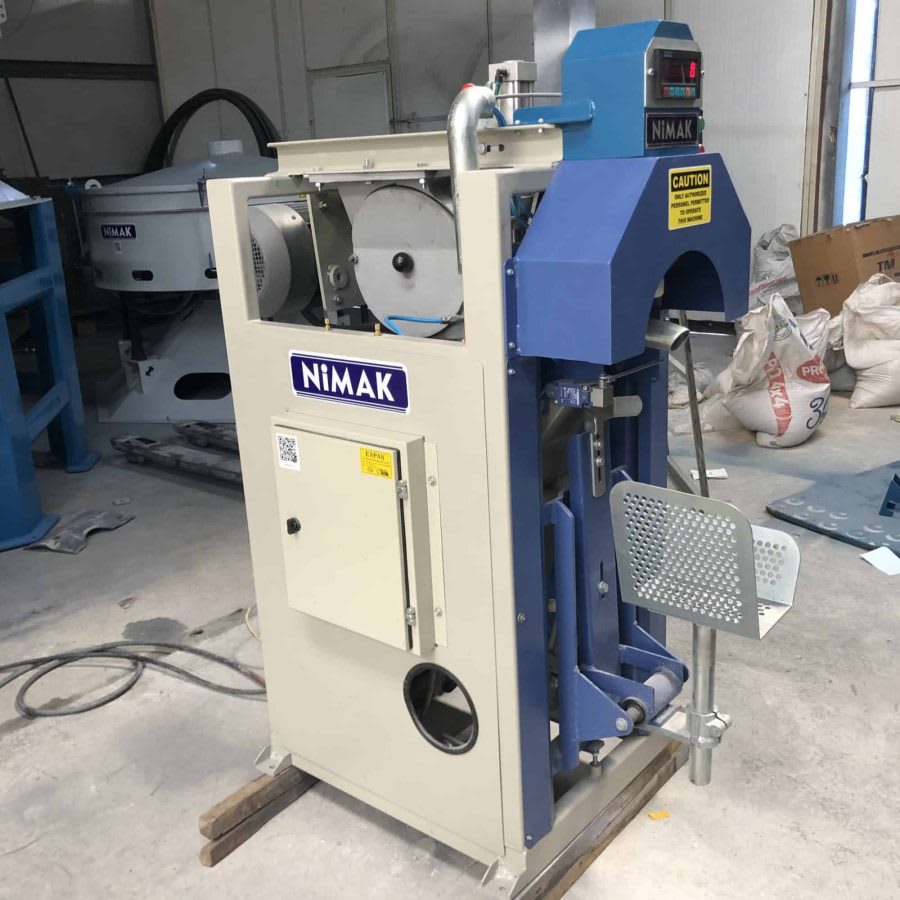
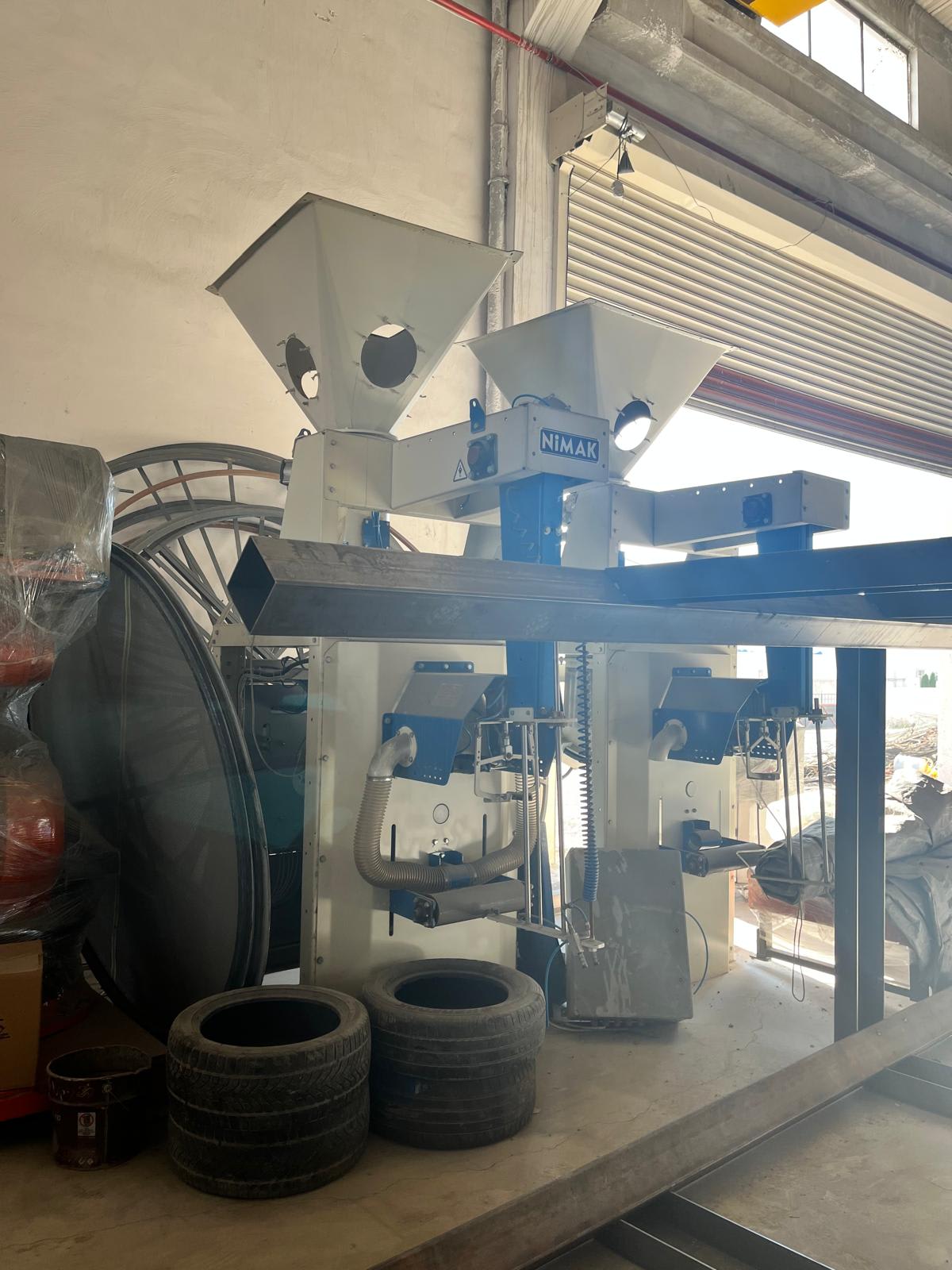
Powder packing fills bags, pails and big-bags by weight. Screw or vibratory feed keeps dust inside a closed system; a PLC manages recipes.
Confirm price, delivery and installation
Operating principle
A weigher controls a screw or vibrating trough up to the target weight. The filling point can be enclosed and connected to extraction and material supply. PLC recipes store set-points and sequence parameters for changing products and containers.
Where this machine is used
Calcite, cement, gypsum, flour, fertiliser, construction chemicals and food powders.
Industries
Advantages
Weigh-filling instead of volume guesswork
Screw or vibratory fill
Enclosed fill point with extraction connection
PLC recipes for changing containers
Technical data
Filling rate
On request
Weighing range
On request
Container types
Bag, pail, big-bag
Control
PLC with recipes
Options
- Bag, pail or big-bag station
- Screw or vibratory filling
- Connection to dust collection
- Recipe management in the PLC
Industries
- Minerals & calcite
- Cement & construction chemicals
- Food
- Fertiliser
Material options
- Calcite, cement and gypsum
- Flour and food powders
- Fertiliser and construction chemicals
Frequently asked sizing questions
Which containers can a powder packing system handle?
Depending on configuration, bags, pails or big-bags are possible. Container dimensions, target weight, closure, product and required output must be defined before selection.
Which product data matters for packing?
Required data includes bulk density, flow behaviour, particle size, moisture, temperature, dust behaviour, hygiene, explosion protection and cleaning. These determine the feeder and filling point.
When can filling accuracy be stated as binding?
Only after the product, container, weighing system, target weight and operating sequence are defined or tested. Binding accuracy is therefore agreed in the project-specific technical specification.
Related machines
Information for a reliable technical assessment
Complete process data helps us assess the machine, options and scope of supply more precisely.
- Feed material or workpiece and required process result
- Initial condition, target quality and required capacity or cycle time
- Operating conditions such as moisture, temperature, abrasion or hygiene requirements
- Available installation space and mechanical, electrical or process interfaces
- Required scope of supply and technical documentation
Have the machine sized for your process
Tell us the feed material, feed and target particle size, required capacity and operating time. We will assess the technically suitable configuration.