
Sheet-metal forming
Ridge-cap machine
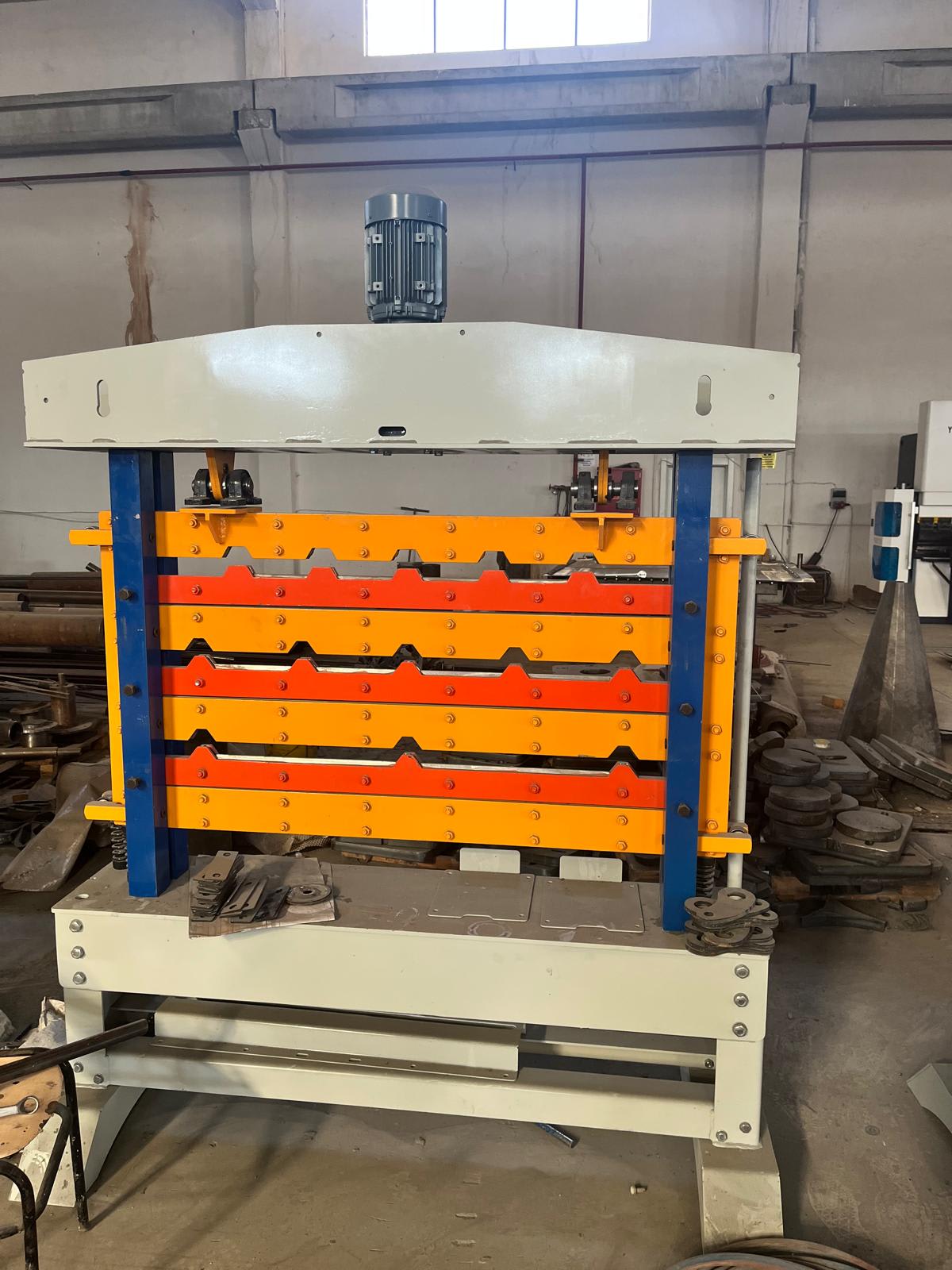
The ridge-cap machine forms roof and façade ridge profiles from coil in successive roll stations and cuts them to length. A PLC controls feed and cut.
Confirm price, delivery and installation
Operating principle
Strip from coil passes successive roll stations that form the ridge profile step by step. At the end a shear cuts to target length. The PLC keeps feed, cut and stacking together. Sheet thickness, line speed and drive are sized for the material and profile.
Where this machine is used
Ridge profiles for roof and façade in sheet processing and construction.
Industries
Advantages
Continuous roll forming from coil
Cut-to-length in the line
PLC-controlled feed
Roll set for roof and façade ridges
Technical data
Capacity
On request
Sheet thickness
On request
Motor power
On request
Working width
On request
Options
- Roll set by ridge geometry
- Automatic cut-to-length
- Stacking after the shear
- Coil decoiler and straightener
Industries
- Roof & façade
- Sheet processing
- Construction
Material options
- Steel sheet subject to project approval
- Coated roof sheet
Frequently asked sizing questions
What data is needed for a ridge-cap machine?
A dimensioned profile drawing, sheet material and strength, coating, thickness and width range, coil weight, required lengths, tolerances and daily output are required. An approved sample helps define the profile unambiguously.
How is coated sheet protected during roll forming?
Roll geometry, finish, cleanliness, guidance and forming stages are matched to the approved material. Permitted visual characteristics and inspection conditions are agreed in advance; scratch-free output is not promised without a material trial.
How are length and profile dimensions accepted?
Cut length, profile dimensions, angles, straightness and twist are set as measurable acceptance criteria. Confirmation uses approved coil material, agreed measuring equipment and documented samples.
Related machines
Information for a reliable technical assessment
Complete process data helps us assess the machine, options and scope of supply more precisely.
- Feed material or workpiece and required process result
- Initial condition, target quality and required capacity or cycle time
- Operating conditions such as moisture, temperature, abrasion or hygiene requirements
- Available installation space and mechanical, electrical or process interfaces
- Required scope of supply and technical documentation
Have the machine sized for your process
Tell us the feed material, feed and target particle size, required capacity and operating time. We will assess the technically suitable configuration.