
Sheet-metal forming
Roll-forming line
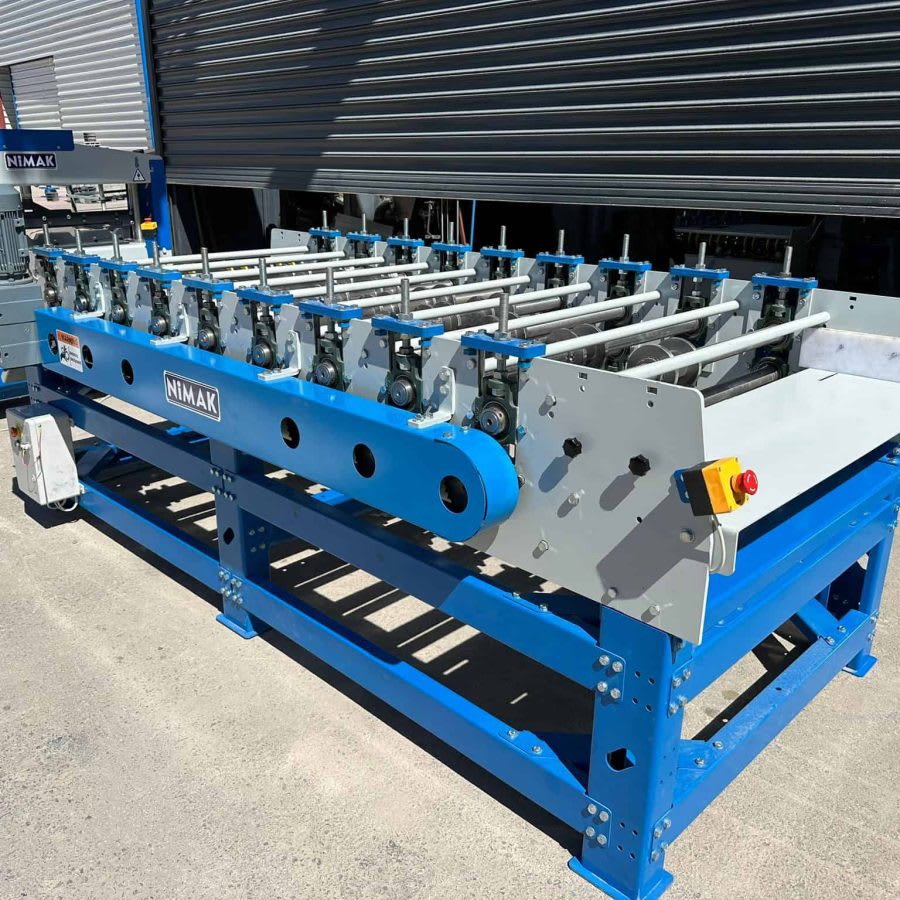
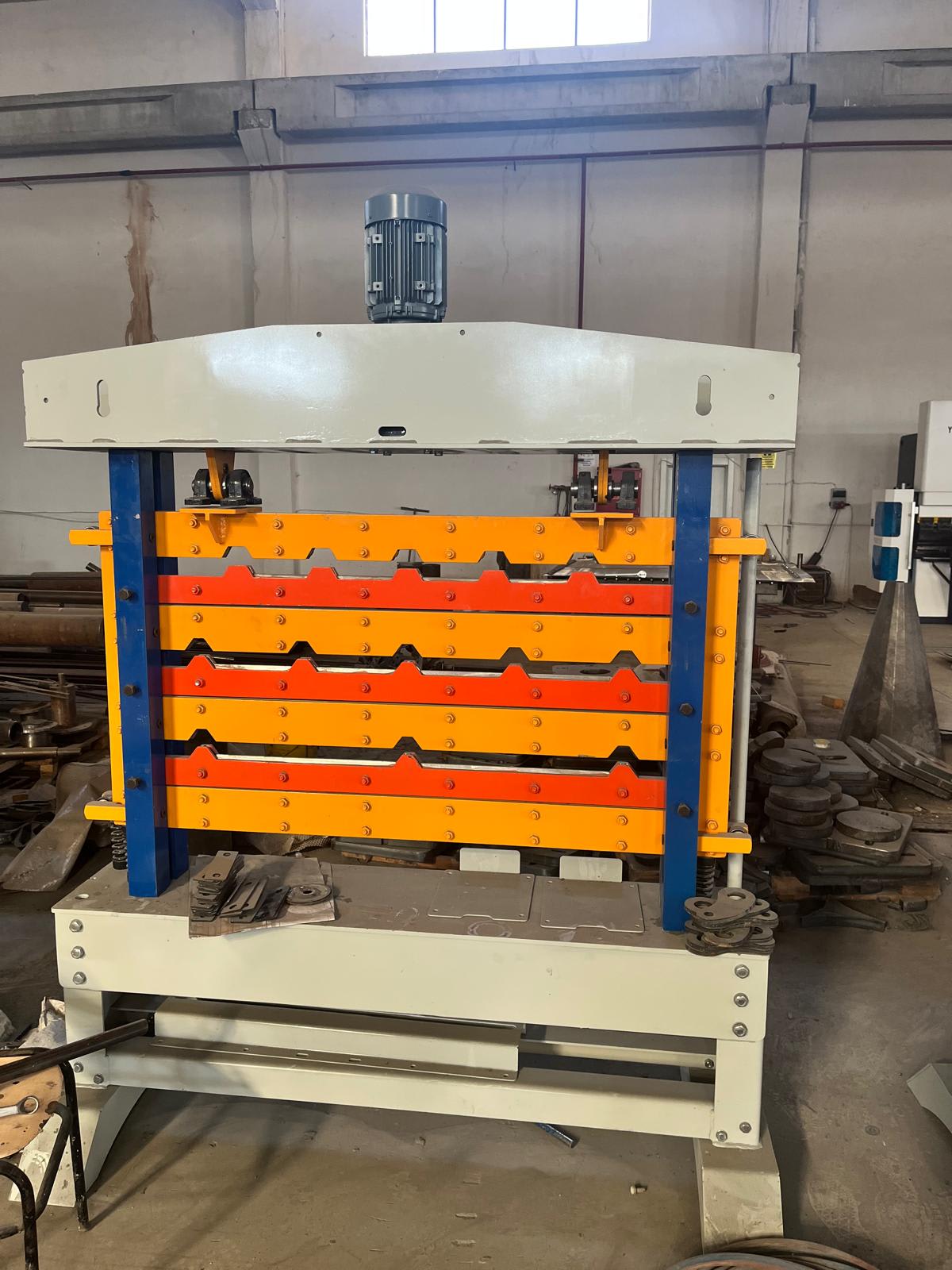
The roll-forming line shapes trapezoidal sheet, façade and roof panels and C/Z profiles in successive roll stations. Cutting and stacking run automatically; roll sets are project-specific.
Confirm price, delivery and installation
Operating principle
Strip from coil passes progressive roll stations. Each station brings the profile closer to the final geometry. At the end a shear cuts to length and a stacker takes the parts. Roll set, sheet thickness, capacity and motor power are specified for each project.
Where this machine is used
Trapezoidal sheet, façade and roof panels, C and Z purlins, gutters, plus construction and automotive profiles.
Industries
Advantages
Progressive roll stations from coil
Automatic cut-to-length and stacking
Project-specific roll sets
Project-specific sheet thickness
Technical data
Sheet thickness
On request
Capacity
On request
Motor power
On request
Number of stations
On request
Options
- Roll set by profile
- Decoiler, straightener and entry
- Stacking and bundling
- In-line punching
Industries
- Roof & façade
- Steel construction
- Automotive profiles
Material options
- Steel sheet subject to project approval
- Coated roof and façade sheet
Frequently asked sizing questions
What information is needed for a roll-forming line?
Required information includes a dimensioned profile drawing, material and strength, coating, sheet-thickness range, coil width and weight, required lengths, tolerances, punching pattern, line output and available space. Sample parts and coil specifications are preferable.
Can one roll set produce several profiles?
It depends on geometry, dimensional range and required changeover time. Adjustable stations or change cassettes may be possible, while substantially different profiles usually need dedicated roll sets. Feasibility is checked from the drawings.
How are dimensional accuracy and surface quality confirmed?
Profile dimensions, straightness, twist, cut length and acceptable surface characteristics are agreed in advance as acceptance criteria. Binding confirmation takes place during acceptance using approved material and defined measurement methods.
Related machines
Information for a reliable technical assessment
Complete process data helps us assess the machine, options and scope of supply more precisely.
- Feed material or workpiece and required process result
- Initial condition, target quality and required capacity or cycle time
- Operating conditions such as moisture, temperature, abrasion or hygiene requirements
- Available installation space and mechanical, electrical or process interfaces
- Required scope of supply and technical documentation
Have the machine sized for your process
Tell us the feed material, feed and target particle size, required capacity and operating time. We will assess the technically suitable configuration.