
Sheet-metal forming
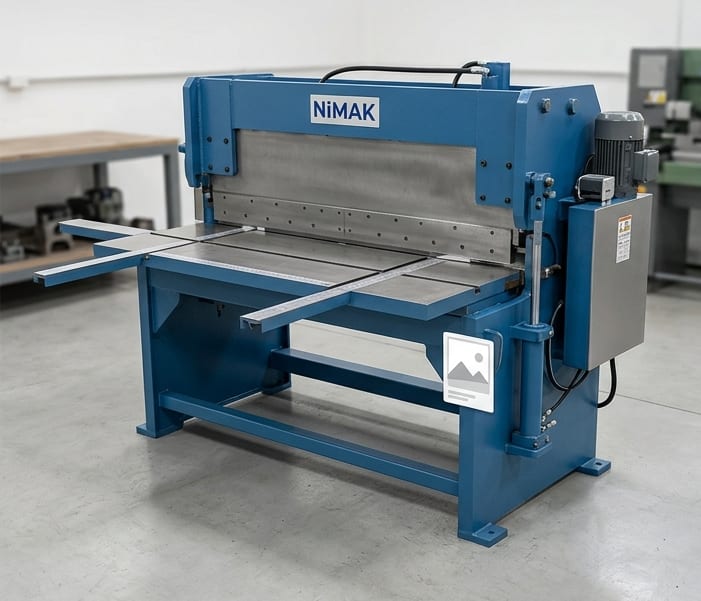
Guillotine shear
The guillotine shear cuts sheet in a guillotine stroke. Blade clearance follows thickness; the backgauge sets cut length. The drive is hydraulic or mechanical.
Confirm price, delivery and installation
Operating principle
Upper and lower blades work in a rake cut. Blade clearance is set by sheet thickness so burr and cut quality stay in range. A backgauge positions the sheet. Sheet thickness, cut length and drive are sized for each project.
Where this machine is used
Sheet blanking in roof and façade shops, fabrication shops and machine building.
Industries
Advantages
Blade clearance by sheet thickness
Backgauge for repeatable length
Hydraulic or mechanical drive
Project-specific sheet thickness
Technical data
Sheet thickness
On request
Cutting speed
On request
Drive power
On request
Cut length
On request
Options
- Hydraulic or mechanical drive
- Powered backgauge
- Front stops and supports
- Cut-length layout by sheet size
Industries
- Roof & façade
- Fabrication shops
- Machine building
Material options
- Steel sheet subject to project approval
- Coated roof and façade sheet
Frequently asked sizing questions
What data determines the right guillotine shear?
Key factors are material, tensile strength, maximum and minimum sheet thickness, cut length, required strokes, format, surface requirement and available power. Permitted thickness must not be stated without reference to material strength.
What determines burr and cut quality?
Blade clearance, blade condition, material, sheet thickness, hold-down and machine rigidity act together. Expected quality and inspection method are agreed as acceptance criteria using the actual sheet.
Which safety equipment is provided?
Guarding, emergency stop, access protection, operating concept and applicable conformity requirements are defined for the installation country and use. The specific scope is documented in the quotation and risk assessment.
Related machines
Information for a reliable technical assessment
Complete process data helps us assess the machine, options and scope of supply more precisely.
- Feed material or workpiece and required process result
- Initial condition, target quality and required capacity or cycle time
- Operating conditions such as moisture, temperature, abrasion or hygiene requirements
- Available installation space and mechanical, electrical or process interfaces
- Required scope of supply and technical documentation
Have the machine sized for your process
Tell us the feed material, feed and target particle size, required capacity and operating time. We will assess the technically suitable configuration.