
Plant engineering
Construction-chemicals plant
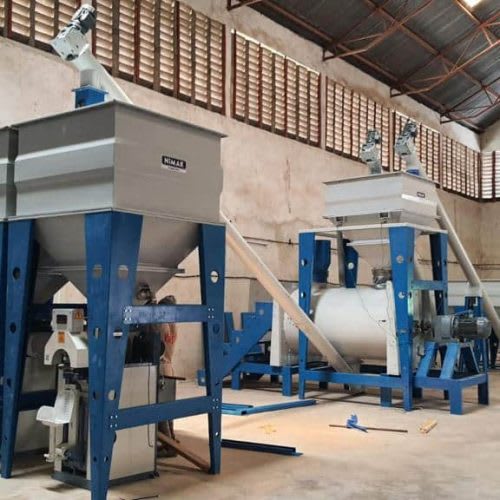
The construction-chemicals plant doses cement, sand, calcite and additives, mixes them and packs automatically. Silos and PLC recipes keep batches repeatable.
Confirm price, delivery and installation
Operating principle
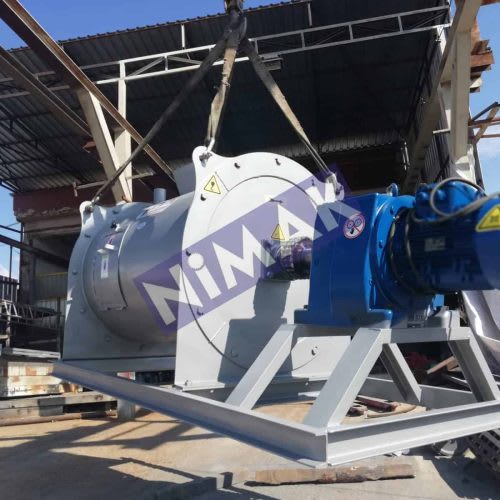
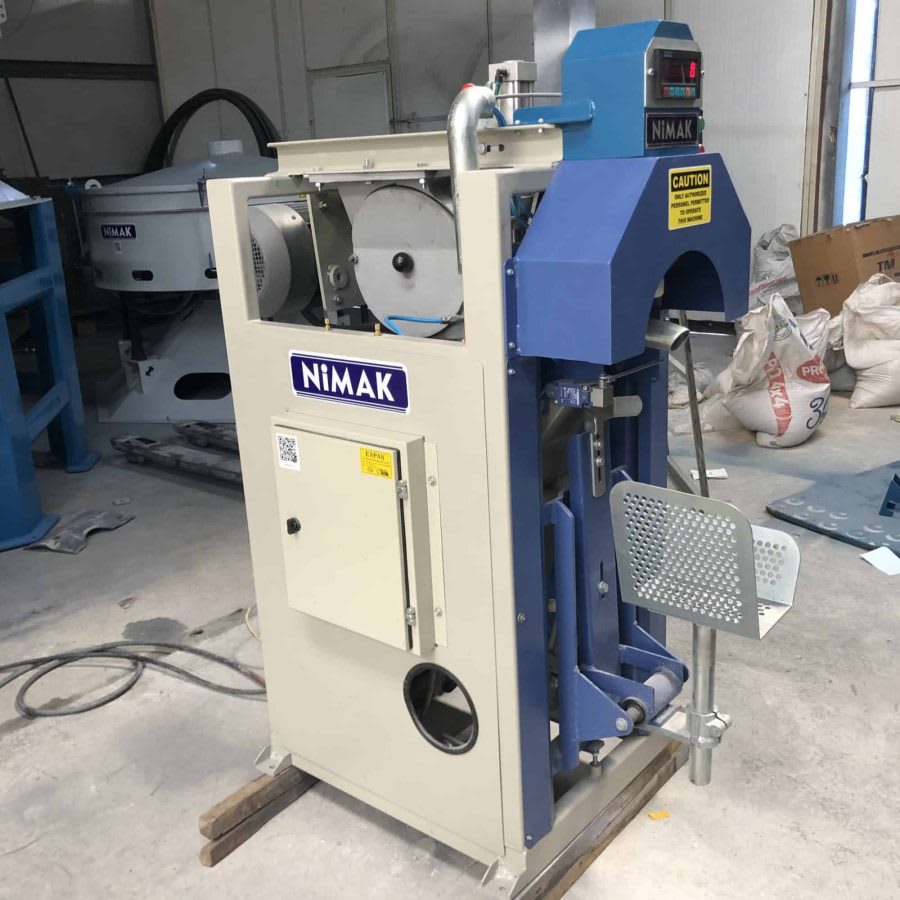
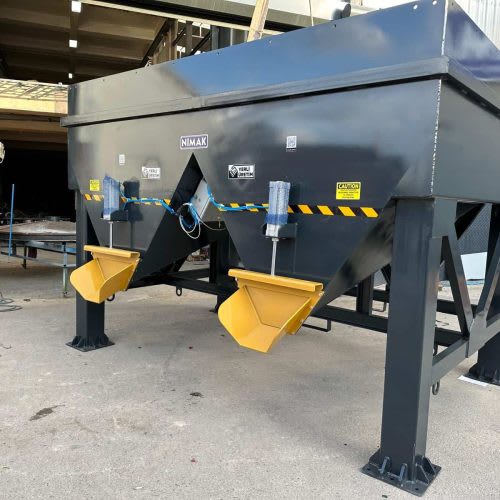
Raw materials sit in silos and are weighed. The mixer homogenises the batch. Packing goes to bags or big-bags. The PLC stores recipes for plaster, tile adhesive, grout, screed and repair mortar.
Where this machine is used
Ready plaster, tile adhesive, grout, screed and repair mortar.
Industries
Advantages
Weighing of cement, sand, calcite and additives
Mixer and automatic packing
Silos for raw materials and finished goods
PLC recipes for product change
Technical data
Capacity
On request
Mixer volume
On request
Number of silos
On request
Control
PLC with recipes
Options
- Silo count by recipe range
- Mixer type by recipe
- Bag and big-bag packing
- Dust collection on the mixer plant
Industries
- Construction chemicals
- Dry mortar
- Building-materials production
Material options
- Cement and sand
- Calcite
- Additives and finished mortar
Frequently asked sizing questions
Which products can a construction-chemicals plant make?
Depending on recipe and configuration, dry-mix products can include plaster, tile adhesive, grout, screed or repair mortar. Raw materials and recipes must be assessed before sizing.
Which data determines silos, dosing and mixer?
Key data includes recipe list, number of raw materials, bulk densities, dosing quantities, batch size, required output, mixing time, cleaning and changeover concept, and available building height.
Which interfaces must be clarified before quotation?
Clarify raw-material receiving, silo filling, power and compressed air, dust control, building and steelwork, packing formats, palletising, operators, local permits, installation and commissioning scope.
Related machines
Information for a reliable technical assessment
Complete process data helps us assess the machine, options and scope of supply more precisely.
- Feed material or workpiece and required process result
- Initial condition, target quality and required capacity or cycle time
- Operating conditions such as moisture, temperature, abrasion or hygiene requirements
- Available installation space and mechanical, electrical or process interfaces
- Required scope of supply and technical documentation
Have the machine sized for your process
Tell us the feed material, feed and target particle size, required capacity and operating time. We will assess the technically suitable configuration.